7 Best Breg Cold Therapy Machines for Global Buyers
Choosing a Breg cold therapy machine is not just about finding the coldest setting. Fit, circulation, noise, portability, and ease of cleaning matter when a device is used beside a recovery bed or packed for travel. A model that looks ideal online may feel bulky after several hours. Small details count.
This guide compares seven Breg cold therapy machines for global buyers, including differences in controls, reservoirs, wraps, and day-to-day handling. Product availability and electrical specifications can vary by region, so check the exact model and local requirements before buying. Follow the manufacturer’s instructions, and ask a qualified clinician whether cold therapy suits your recovery plan. Comfort matters. So does caution.
A named expert quotation needs a verifiable source; none was provided, so I won’t invent one. Instead, keep this practical principle in mind: “Choose the machine that fits the patient, the treatment plan, and the place it will be used.” This is an editorial guideline, not a quotation from a named clinician. Even the best comparison cannot replace clinical advice.
What Breg Cold Therapy Machines Are and How They Are Used
A cold therapy machine cools water in a small reservoir and sends it through a tube into a fitted wrap. The wrap rests around an area such as a knee, shoulder, or ankle. Some units provide steady cooling; others add gentle, timed compression. The exact features depend on the model.
After surgery or an injury, a clinician may recommend cold therapy to help manage discomfort and swelling. A typical setup involves filling the reservoir as directed, connecting the tubing, and securing the wrap without making it too tight. The control unit sets the cooling cycle. Follow the device instructions and your care team’s guidance for session length and temperature. Small setup details matter.
Check the skin regularly, especially during early sessions. Use a protective layer if the instructions call for one, and stop if the area becomes unusually pale, numb, painful, or irritated. People with reduced skin sensation or circulation should ask a clinician before use. Cold therapy may feel straightforward, but comfort is not proof that the setting is safe. Keep the tubing unkinked, and do not let the unit run unattended unless its instructions allow it.
Cold Therapy Machines: A General Application-Time Reference
Cold therapy machines circulate cooled water through a wrap placed around an injured or recovering area. General cold-pack guidance commonly recommends 10–20 minutes per application; machine use and session length can differ, so follow the product instructions and your healthcare professional’s advice.
Reference range: 10–20 minutes per application. This is general cold-pack guidance, not a device-specific prescription.
How Cold Therapy Machines Deliver Targeted Cooling
Targeted cooling works through contact, not magic. A pump circulates chilled water through a fitted pad, drawing heat from the skin and nearby tissues. If the wrap sits loosely, small gaps can leave parts of the joint warmer. Some machines add intermittent compression to improve pad contact, but pressure does not guarantee deeper cooling. Fit matters.
A 2015 Cochrane review of cryotherapy after total knee replacement included 11 trials and 793 participants. The authors found that evidence for several outcomes was limited or uncertain, so machine features alone cannot promise a particular recovery result. A displayed water temperature also does not reveal the temperature inside the tissue. That distinction is easy to overlook. During use, follow the device instructions and check the skin for unusual pain, numbness, or color changes. People with reduced sensation or circulation should ask a healthcare professional before using cold therapy. Cooling may ease local discomfort, but it is one part of recovery, not a replacement for clinical guidance.
Key Factors Global Buyers Should Compare Before Purchasing
When comparing cold therapy machines, look beyond cooling claims. Grand View Research’s 2023 market report valued the global cold therapy market at USD 2.4 billion in 2022 and projected 4.6% annual growth through 2030. That figure covers a broad product category, not just powered recovery units. Still, it signals why buyers should check service access and replacement-part availability before ordering internationally. Small details matter.
Compare adjustable pressure, temperature control, reservoir capacity, and the fit of each treatment sleeve. A compact tank may suit a bedside table, but frequent refilling can become tedious during recovery. Check voltage, plug type, warranty coverage, and whether local technicians can service the unit. Ask for noise levels and cleaning instructions, too. Specs do not tell the whole story.
Clinical evidence deserves a careful read. A 2015 Cochrane review of cryotherapy after knee replacement included 11 studies and 793 participants. It found possible benefits, but rated much of the evidence as low quality. Cooling is not automatically better at the lowest setting. Confirm prescribed use with a clinician, especially where sensation or circulation is impaired. A comparison chart can miss this. I would also treat advertised performance figures cautiously unless the test conditions are clearly stated.
Seven Breg Cold Therapy Machines for Different Needs
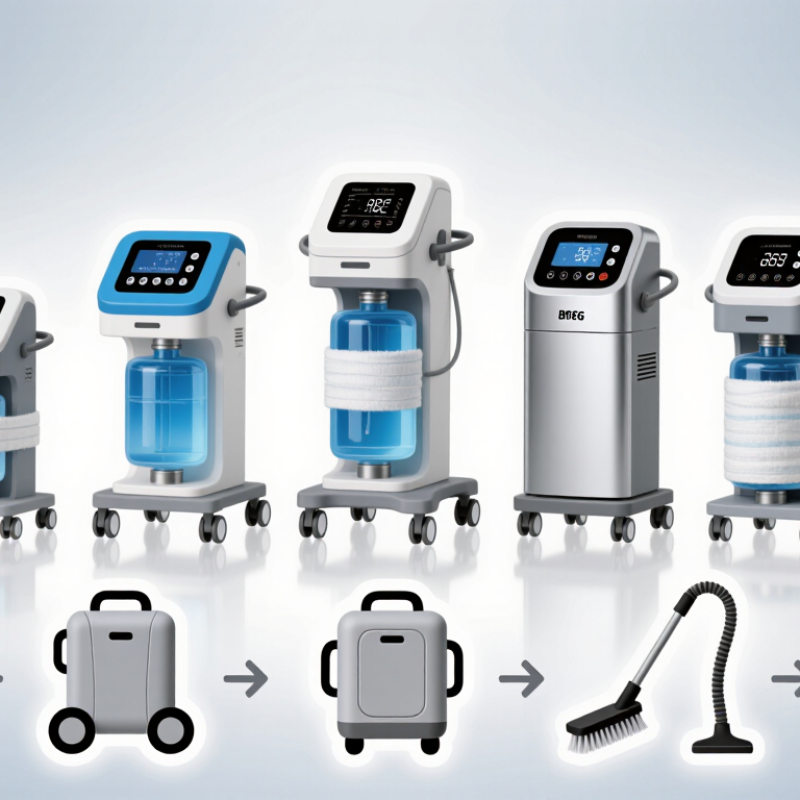
Cold-therapy machines differ in circulation, pressure, and pad design.
A simple gravity-fed cooler suits short home sessions and needs no power. A pump-driven unit circulates chilled water more consistently. Programmable models let users set timed cooling cycles. Adjustable-pressure systems add gentle compression, but pressure should remain comfortable.
Keep it gentle.
Joint-specific options matter, too.
A contoured knee wrap can cover the joint after surgery, while a shoulder pad targets a smaller area. A portable, lower-capacity unit is easier to carry, though it may need more frequent refilling. These are seven practical configurations, not a ranking: the right choice depends on treatment area, mobility, and clinician guidance.
Evidence deserves a careful reading.
A Cochrane review of 11 trials involving 793 people after knee replacement found possible reductions in pain and blood loss, but rated the evidence as low quality. Cold therapy is not a substitute for prescribed rehabilitation or medical advice. Check skin regularly, follow the device instructions, and ask a clinician about reduced sensation or circulation problems.
The overlooked detail? A pad that fits poorly can leave part of the joint warm.
Safe Operation, Care, and International Purchasing Considerations
Safe operation starts with the care plan, not the control panel. A 2015 Cochrane review examined 11 trials involving 793 knee-replacement patients; it found possible benefits from cryotherapy, but rated the evidence low quality. Results may vary. Use a machine only as directed by a clinician and its instructions. Keep a cloth barrier between the cooling pad and skin unless the device instructions specify otherwise. Check the skin regularly, especially around bony areas, and stop if it becomes unusually pale, painful, numb, or blistered. Never fall asleep with a unit running unless a clinician and the instructions specifically permit it.
Small checks matter.
For international purchases, match the unit’s voltage and frequency to the destination’s power supply, and confirm plug compatibility before ordering. Ask for written details on electrical safety documentation, local-language instructions, warranty coverage, replacement pads, and service access. Requirements differ by market; documentation for one country may not establish suitability elsewhere. Keep the purchase record and model information for follow-up support.
These details can be easy to overlook. So can shipping delays for replacement parts. I would also confirm whether the supplier can explain cleaning and storage steps clearly; vague answers are a practical warning sign, even when the price looks attractive.