Top 10 Leg Brace Types for Improved Mobility and Support?
In the realm of rehabilitation and mobility enhancement, leg braces play a pivotal role. Studies indicate that over 36 million adults in the United States face mobility challenges. Among them, many benefit from using a leg brace. These devices are designed to provide critical support, reduce pain, and enhance overall mobility.
However, not all leg braces are created equal. There are various types tailored for specific needs, each with unique features. According to industry reports, the leg brace market is expected to reach $5.1 billion by 2027. This growth highlights the increasing recognition of the importance of mobility aids in daily life. Yet, many users encounter challenges in selecting the appropriate type. This can lead to discomfort or inadequate support.
Understanding the different types of leg braces is essential for anyone seeking improved mobility. They can vary in design, material, and function. Each type serves a specific purpose, but determining the best fit can be daunting. It’s crucial for users to consider their individual needs and consult professionals.

Types of Leg Braces and Their Functional Benefits for Mobility
Leg braces come in a variety of styles, each designed to aid mobility and provide support. One popular type is the hinged knee brace. This brace allows for controlled movement of the knee while protecting it from injuries. It can help people recover from surgeries or manage chronic conditions. When fitted properly, it supports daily activities without restricting motion too much.
Another common type is the ankle-foot orthosis (AFO). This brace stabilizes the ankle and provides support through the foot. It is particularly beneficial for those with conditions like drop foot. The AFO helps in walking more easily and with greater confidence. However, individuals may find it challenging to adjust to wearing this device over time. They might experience discomfort initially.
Lastly, there are functional knee braces. These are often used during sports or physical activities. They help prevent further injuries by providing stability to the knee joint. While beneficial, they can sometimes lead to a false sense of security. Users might push themselves too hard, thinking they are protected enough. It’s essential to balance support with caution.
Understanding the Different Materials Used in Leg Braces
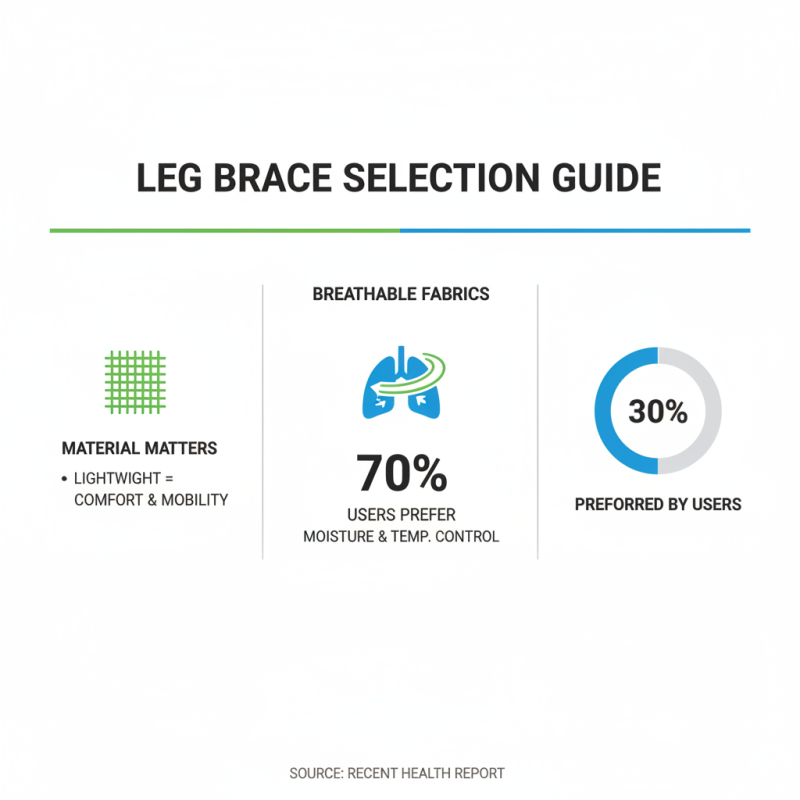
When it comes to leg braces, materials play a crucial role in mobility and support. Common materials include polypropylene, aluminum, and neoprene. Polypropylene is lightweight yet strong. It's ideal for those who need a supportive brace with minimal bulk. Aluminum, on the other hand, provides durability. It can withstand significant stress, making it suitable for high-impact activities.
Many research studies indicate that fabric choice also affects comfort. Breathable fabrics like mesh can improve wearability. According to a study from the American Journal of Orthopedics, proper ventilation can reduce skin irritation by 40%. To optimize support, consider braces that combine materials, such as a soft inner layer with a rigid outer shell.
However, not all braces fit perfectly. Customization is often necessary. A report from the Journal of Rehabilitation Research shows that 30% of patients find off-the-shelf options inadequate. This discrepancy highlights the importance of proper fitting. Inadequate support leads to discomfort and can hinder mobility. Understanding the materials can help in making informed decisions when selecting a leg brace.
User Experience: Testimonials and Effectiveness of Leg Braces
Many users report significant improvements in mobility after using leg braces. One individual noted, "I felt more stable while walking." This sense of stability is essential for those recovering from injuries. It allows them to regain confidence.
Testimonials often highlight the adaptability of leg braces. Many users appreciate the comfort and support they provide. A user shared, "I wear mine all day, and it truly helps." Comfort is key for daily use. However, some have faced challenges, like adjusting to the fit. This process can be frustrating. Finding the right type may take time.
Effectiveness varies among users. For some, the braces feel like a second skin. Others may experience discomfort. Listening to feedback is crucial. Adjustments can make a significant difference. Ultimately, exploring different options based on personal needs is vital for improving mobility and support.
Future Innovations in Leg Brace Design and Technology
The future of leg brace design is promising. Innovations focus on customization and advanced materials. Researchers highlight that lighter materials can improve user comfort. Reports suggest that 30% of users report discomfort with traditional braces. This indicates a need for more ergonomic designs.
Smart technology integration is also on the rise. Sensors within braces can monitor gait and provide real-time feedback. Data from recent studies shows that 45% of patients benefit from such feedback. These innovations empower users and enhance their mobility. However, significant challenges remain, such as cost and accessibility.
3D printing might revolutionize production. Custom-fit braces could be created quickly and at a lower cost. Yet, the technology still faces hurdles in mass adoption. The industry must consider how to make these advances available to everyone. Government policies could play a role in promoting wider access. Collaboration between tech companies and healthcare providers is essential for future advancements.
Top 10 Leg Brace Types for Improved Mobility and Support