
Healthcare environments demand more than products that merely look clean. Medical Paper Towels support hand drying after washing, a small action with serious consequences. In a busy ward, a wet sink area, empty dispenser, or torn sheet can interrupt good hygiene practice.
Professor Didier Pittet, a globally recognized infection-prevention expert, captured the principle clearly: “Clean care is safer care.” His statement does not promote one product. It highlights a wider responsibility. Medical Paper Towels must fit that responsibility through dependable absorbency, low lint, and controlled dispensing.
They should work quickly.
A nurse may need dry hands within seconds before touching a wound dressing. A laboratory technician may require sheets that resist tearing near liquids. In outpatient clinics, sealed packaging and easy storage can reduce unnecessary handling. These details matter because hygiene systems often fail at ordinary points, not dramatic ones.
Medical Paper Towels can also support safer workflow design. Proper dispensers help limit contact with unused sheets. Consistent sizes simplify purchasing and staff training. Clear disposal practices reduce clutter around sinks and treatment areas.
Still, they are not a perfect answer. Paper quality cannot replace proper handwashing, cleaning schedules, or staff education. Some facilities may also face waste, supply, or budget pressures. That limitation deserves honesty.
The strongest choice depends on evidence, user experience, and local conditions. Buyers should examine product specifications, packaging integrity, absorbency testing, and supplier reliability. A practical decision connects the towel, the dispenser, and the people using them. That is why Medical Paper Towels remain a meaningful consideration in global healthcare.
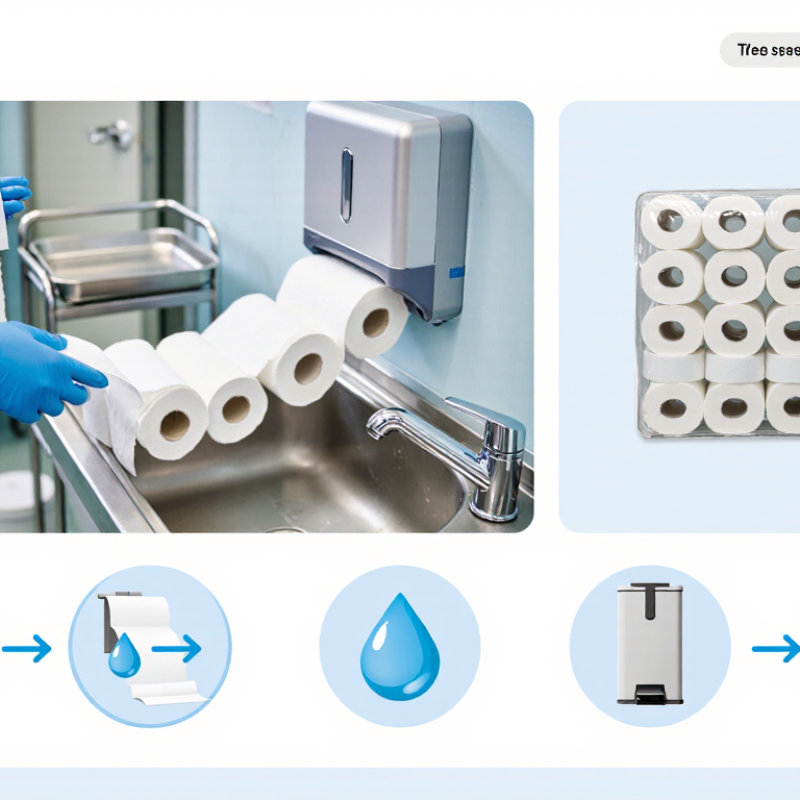
Medical paper towels are disposable, absorbent sheets used for hand drying, surface wiping, and controlled cleanup in healthcare settings. They are commonly made from cellulose fibers, sometimes with layered construction for greater strength and moisture retention. “Medical” describes their intended hygiene environment, not automatic sterility. That distinction matters.
A suitable towel should absorb quickly, release minimal lint, resist tearing when wet, and fit a clean dispenser. Some facilities also require sealed packaging, batch traceability, or compatibility with waste procedures. Thickness alone is not quality. In practice, a soft, thick sheet may perform poorly if it breaks during use. I once viewed absorbency as the main measure; that was incomplete.
The WHO and UNICEF Joint Monitoring Programme reported that 78% of healthcare facilities had basic hygiene services in 2022. This leaves important gaps in reliable handwashing and drying infrastructure. The WHO Guidelines on Hand Hygiene in Health Care identify proper hand drying as part of effective hygiene practice. A paper towel cannot replace safe water, trained workers, or routine cleaning. It can, however, provide a practical single-use barrier between clean hands and shared surfaces. For global healthcare, purchasing decisions should consider local humidity, transport conditions, dispenser design, waste capacity, and verified product testing. Data sheets help, but real ward trials reveal problems that laboratory figures can miss.
| Data Dimension | Medical Paper Towel Information | Healthcare Relevance | Selection Consideration |
|---|---|---|---|
| Definition | A disposable absorbent paper product made primarily from cellulose fibers for drying hands, wiping surfaces, or handling routine spills in healthcare environments. | Supports hygiene routines and helps reduce the need to reuse fabric towels. | Confirm whether the product is intended for hand drying, surface wiping, or general-purpose use. |
| Main Fiber | Usually cellulose pulp, which may be virgin fiber, recycled fiber, or a specified blend. | Cellulose provides absorbency and is widely used in disposable paper products. | Choose the fiber composition according to absorbency, softness, lint control, sustainability, and local procurement requirements. |
| Ply Structure | Common products are available in one, two, or three plies. More plies generally increase thickness and handling strength, but not necessarily absorbency in every formulation. | A suitable ply level can improve user comfort and reduce the number of sheets used per task. | Compare basis weight, wet strength, absorbency, and cost instead of judging performance by ply count alone. |
| Typical Formats | Available as folded sheets, rolls, center-pull rolls, or interfolded towels for dispensers. | The dispensing format affects touch points, storage, replenishment, and consumption control. | Match the towel fold and roll core to the dispenser used in the facility. |
| Absorbency | Absorbency varies with fiber type, sheet structure, basis weight, embossing, and manufacturing process. There is no single absorbency value that applies to all medical paper towels. | Effective absorbency helps dry hands and remove liquids with fewer sheets. | Request product-specific test data and compare products using the same test method. |
| Wet Strength | Wet strength depends on the paper formulation and may be enhanced for applications requiring better integrity when wet. | Improved wet strength can help minimize tearing and residue during wiping. | Select a product that stays intact for the intended task without creating unnecessary material use. |
| Lint Performance | Lint levels vary by fiber quality, converting process, and sheet construction. Low-lint products are specifically designed to release fewer loose fibers. | Lower lint can be important around equipment, clean areas, and surfaces where fiber residue is undesirable. | Use supplier test data or facility trials when lint control is a critical requirement. |
| Sterility Status | A medical paper towel is not automatically sterile. Sterility applies only when the product is specifically processed, packaged, and labeled as sterile. | Prevents users from assuming that a disposable towel is suitable for sterile procedures. | Check the label and technical documentation; use sterile products only where the procedure requires them. |
| Single-Use Function | Most paper towels intended for healthcare hygiene are designed for one-time use and disposal. | Single use helps avoid the repeated handling and laundering associated with reusable towels. | Provide adequate dispensers and disposal capacity to support correct use. |
| Hand Hygiene Role | Paper towels are used after handwashing to remove moisture from the hands. | Thorough drying is an important part of hand hygiene because wet hands can transfer microorganisms more readily than dry hands. | Choose a size and absorbency level that allows effective drying without excessive sheet consumption. |
| Packaging | Packaging may be individual, inner-pack, or bulk-packed, depending on the intended use and distribution channel. | Appropriate packaging protects the product during transport and storage. | Review moisture protection, carton strength, pack quantity, storage conditions, and traceability information. |
| Sustainability Factors | Environmental impact depends on fiber source, recycled content, manufacturing energy, packaging, transport, and disposal practices. | Procurement teams can evaluate environmental performance without compromising hygiene or product function. | Assess verified environmental claims, responsible fiber sourcing, recycled content, packaging reduction, and total consumption. |
| Disposal | Used towels should be disposed of according to the contamination level, facility procedures, and applicable local regulations. | Correct disposal supports infection-control procedures and workplace safety. | Do not flush paper towels unless the product is specifically designed and approved for that purpose; follow site waste-management rules. |

